This project showcases the potential of ESP32 technology in smart home automation. By leveraging the WiFi capabilities of the ESP32 microcontroller, we can control an LED and a stepper motor remotely using a web page. This project demonstrates the basics of IoT (Internet of Things) and its applications in home automation.
Components Used:
- ESP32 Microcontroller
- LED
- Stepper Motor
- Breadboard
- Jumper Cables
Implementation Process:
- The components are connected to the breadboard, ensuring a stable platform.
- The LED and stepper motor are connected to the ESP32 via jumper cables, following safe engineering practices.
- The ESP32 is connected to the computer via a USB cable for power and code uploading.
Code Implementation:
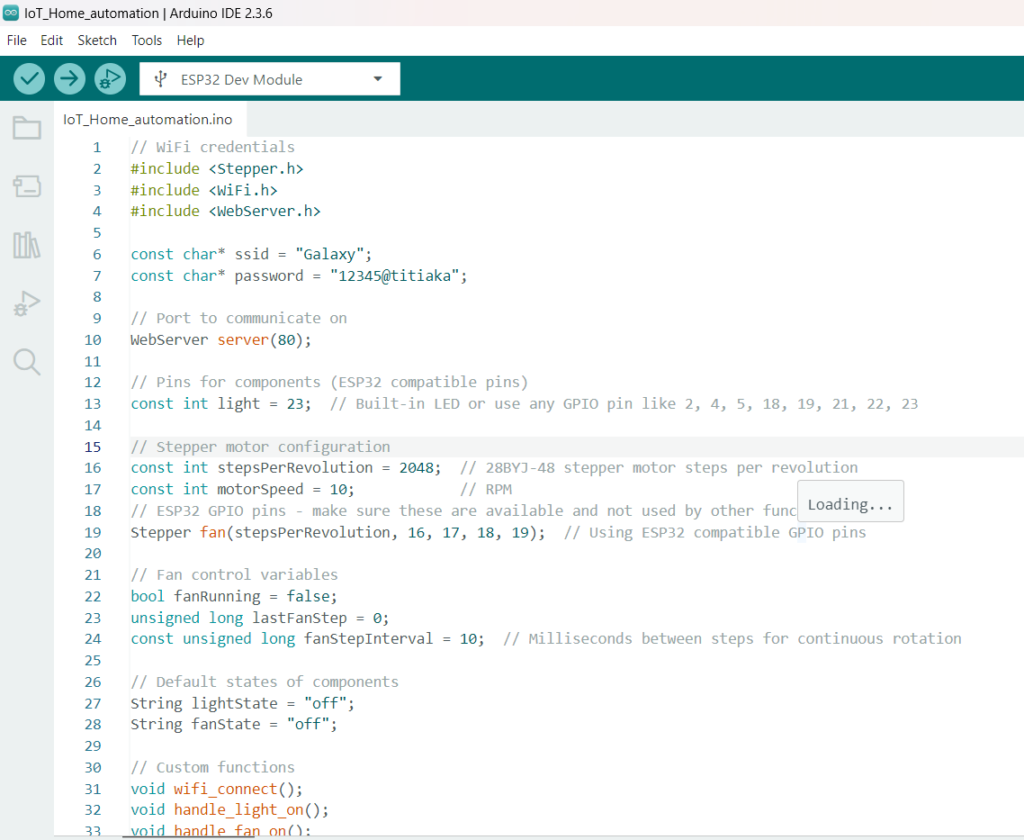
The code utilizes the following libraries:
- Stepper.h for stepper motor control
- WiFi.h for WiFi connectivity
- WebServer.h for custom web page development
The code is written in Arduino IDE and prints out the IP address of the network, which is used to access the web page.
Testing Stage:
- Upload the code to the ESP32.
- Enter the IP address in a web browser (ensure shared network).
- Control the LED and stepper motor remotely using the web page.
Conclusion:
This project demonstrates the potential of ESP32 technology in smart home automation. With the ability to control devices remotely, this project showcases the basics of IoT and its applications.
Future Implementations:
- Using Blynk IoT for a simpler and user-friendly interface.
- Integrating voice control for enhanced user experience.
Benefits:
- Remote control of devices
- Increased convenience
- Potential for energy efficiency
Applications:
- Home automation
- Industrial automation
- IoT-based projects